A viewer decides to stay or swipe in under two seconds, and the platform grades your video on that decision. Short-form algorithms rank retention, how many people keep watching and for how long, above production value. A shaky phone video that holds viewers beats a polished edit that loses them, every time.
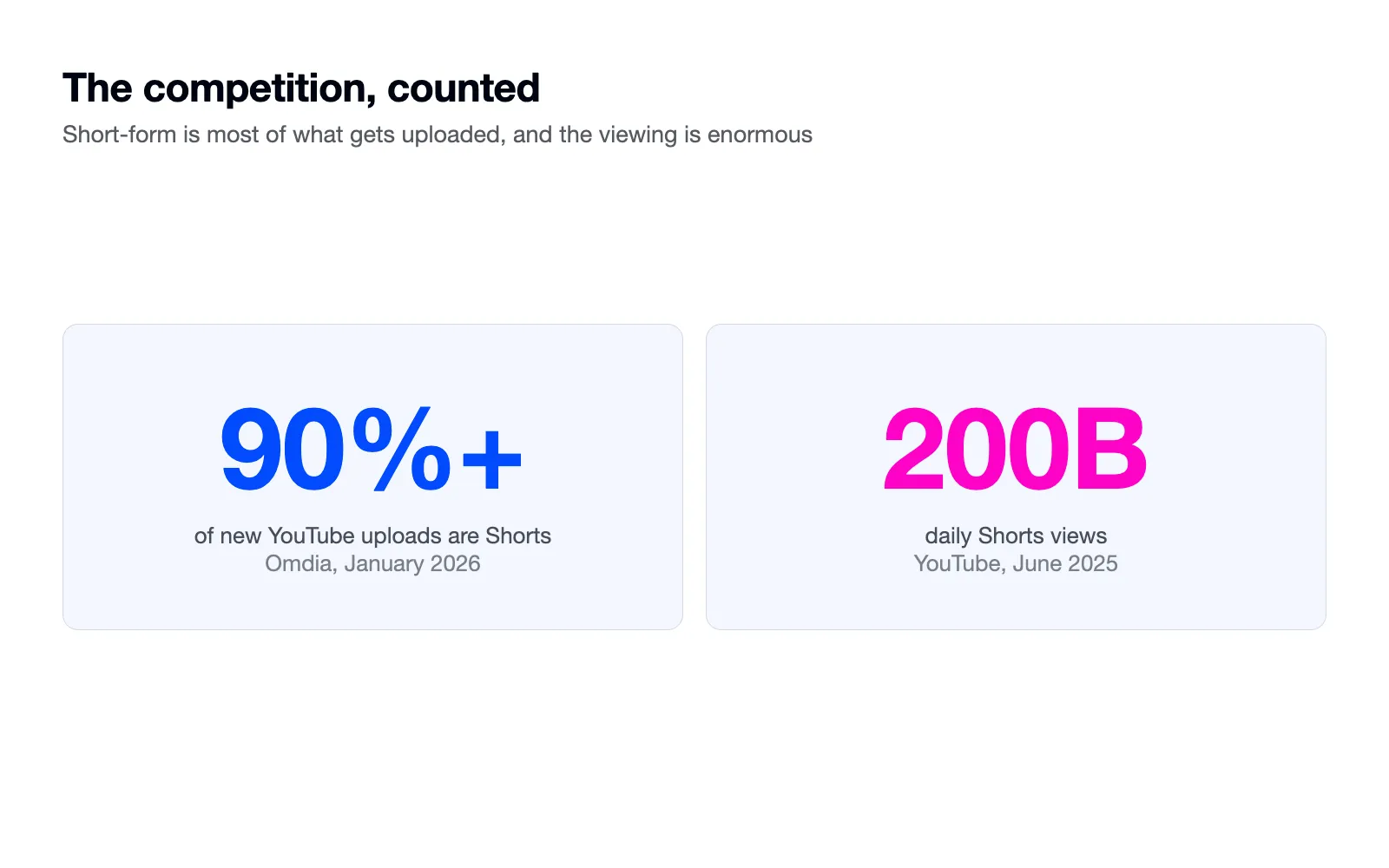
The competition is the reason this matters so much. Omdia's January 2026 research found Shorts now make up over 90% of new uploads on YouTube, and YouTube's chief executive put Shorts at 200 billion daily views in June 2025. Every video you post competes with a swipe that costs the viewer nothing. The hook is what decides whether you get watched at all.
What a hook actually is
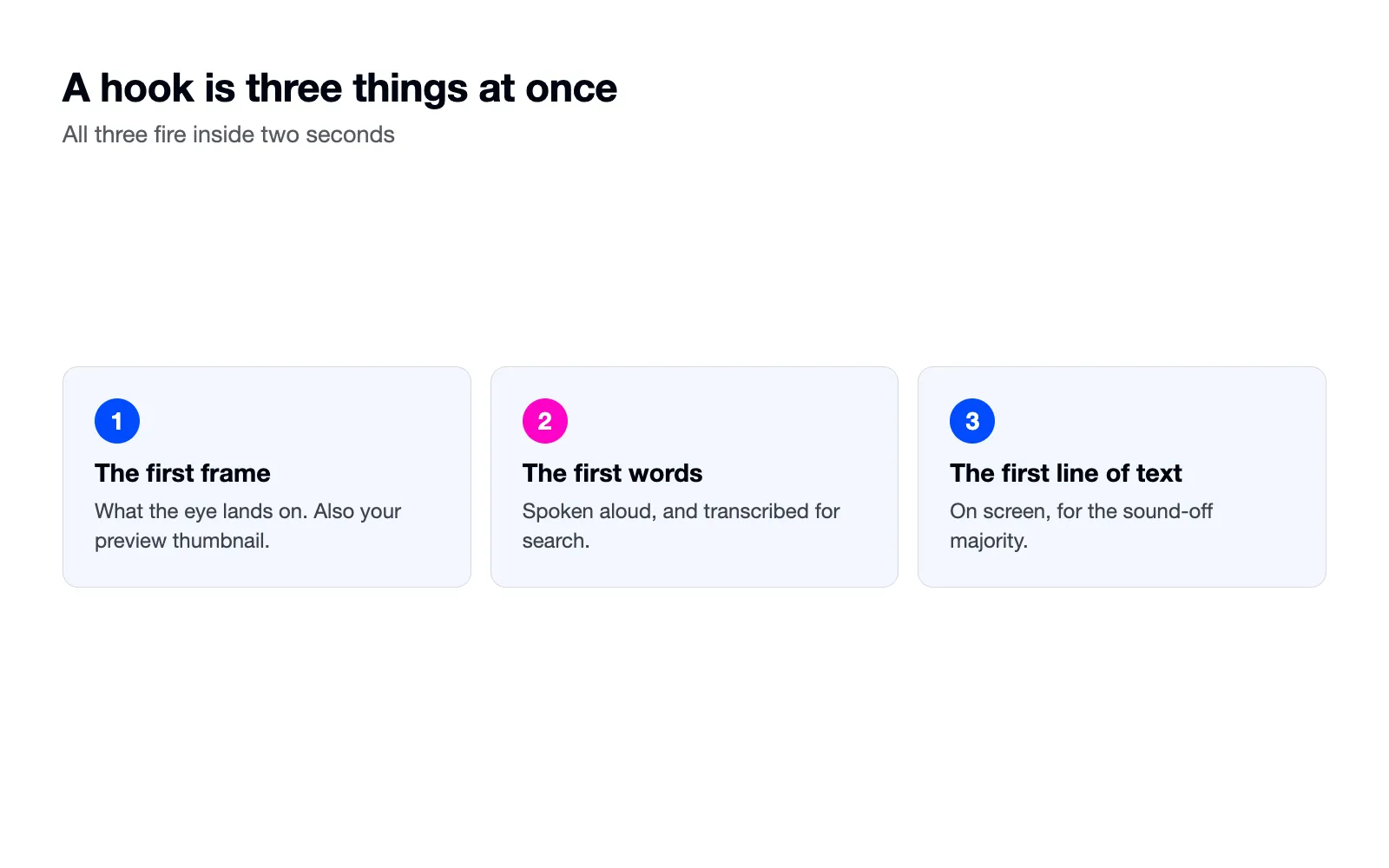
A hook is three things arriving at once: the first frame the eye lands on, the first words out of anyone's mouth, and the first line of text on screen. All three fire inside two seconds, and any of the three can save or sink the video.
A hook is not an introduction. The instinct to warm up is the killer here. A video that opens with a logo card wastes its two seconds. So does one that opens with a greeting. By the time the point arrives, the audience that needed convincing has gone.
Five openings that keep people watching
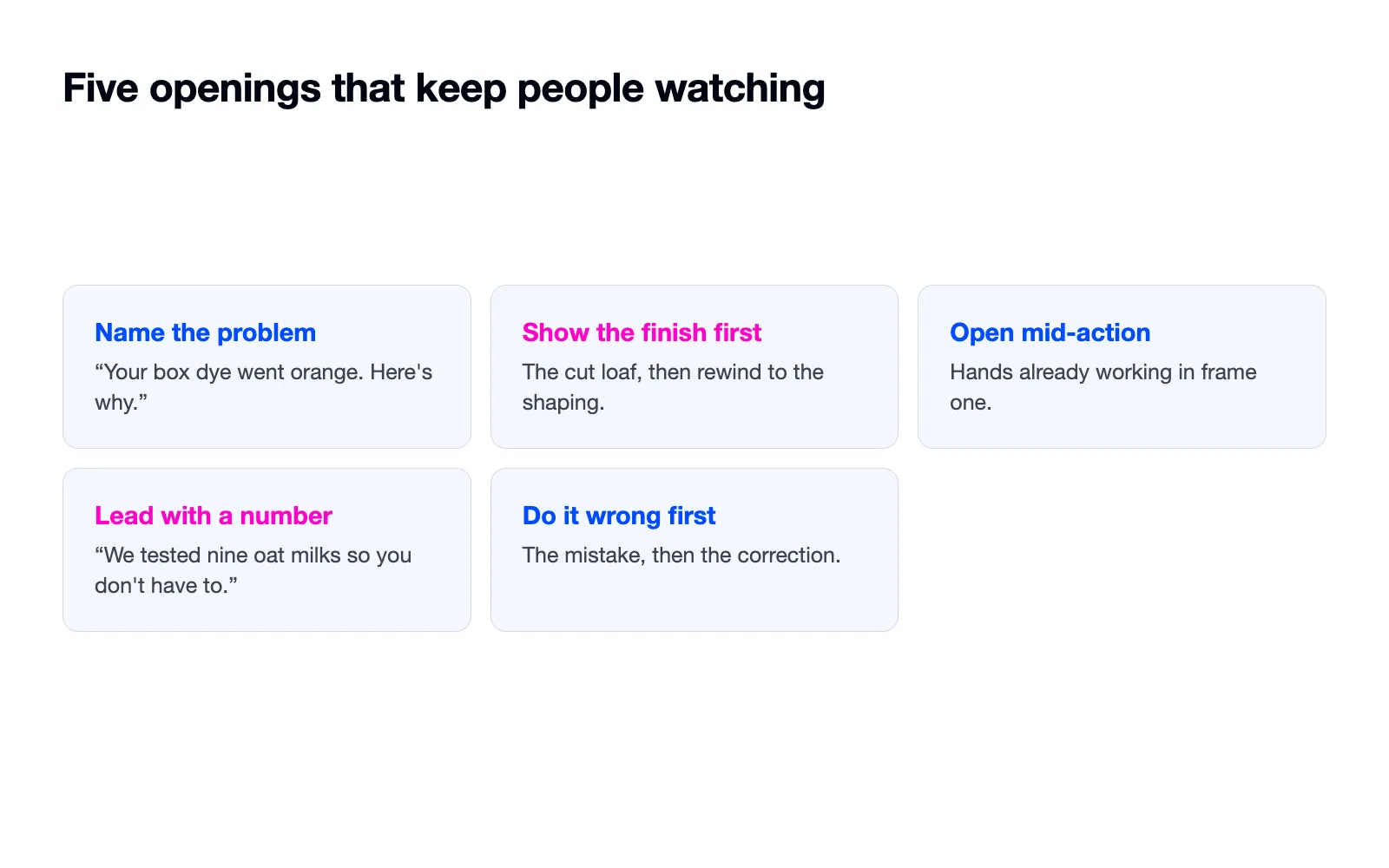
Name the viewer's problem in the viewer's words. A salon opens with someone saying your box dye went orange, and here is why. The people with orange hair stop scrolling, because the video is visibly for them. Specific beats broad: name the exact problem, not the category.
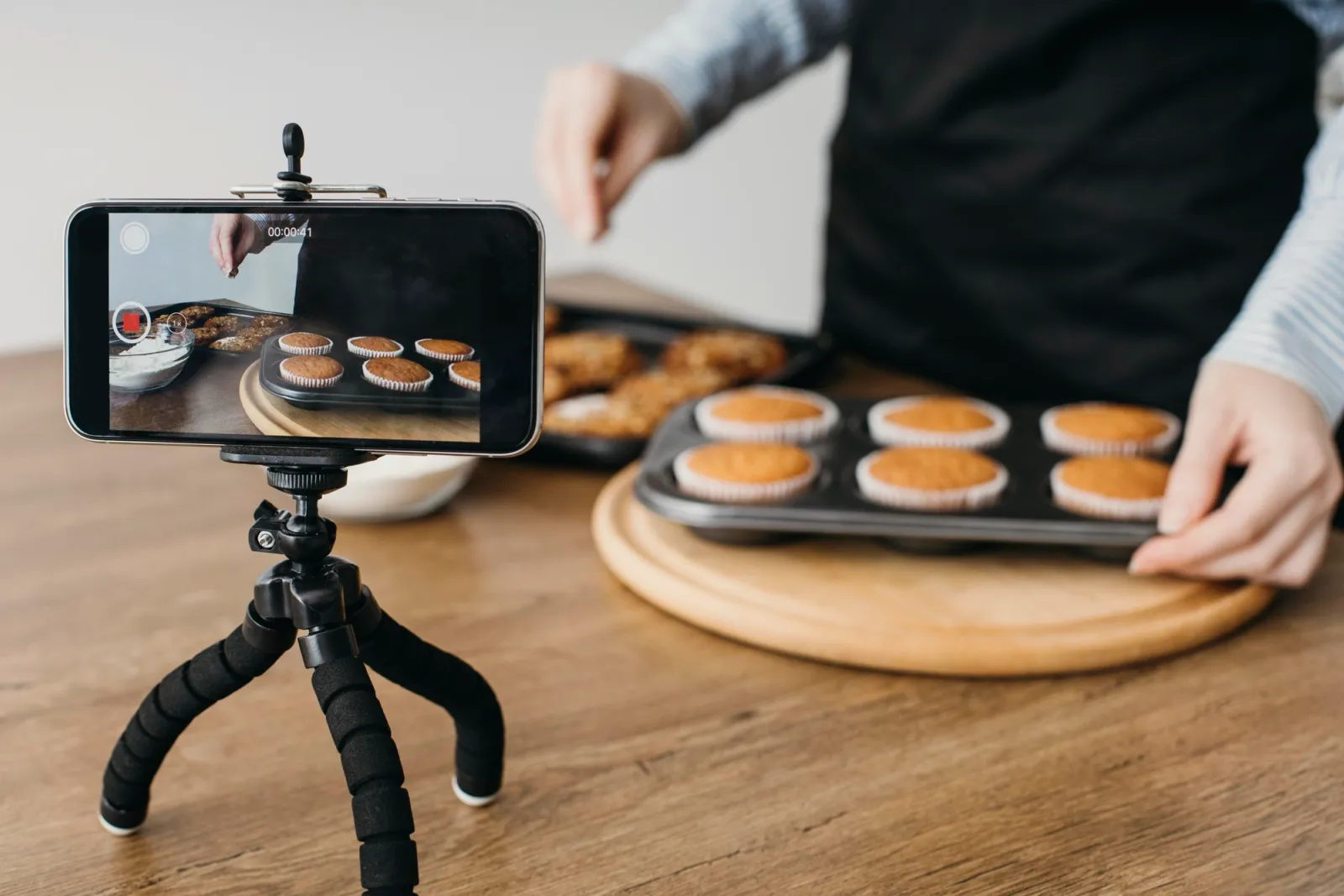
Show the finish first. A bakery opens on the cross-section of the finished loaf, then rewinds to the shaping. The result is the promise, and the promise is what buys the next thirty seconds. Renovations, plating, hair, cakes, gardens: anything with a satisfying end state can lead with it.
Open mid-action. Motion in the first frame outperforms a still, and mid-action beats setup. Start the video with hands already working, the pour already happening, the box already half open. The viewer lands in the middle of something happening, and it is harder to leave halfway through than before the start.
Lead with a number that has stakes. This display took one afternoon and doubled our foot traffic. We tested nine oat milks so you don't have to. Numbers read as evidence, and evidence stops more people than adjectives do.
Do it wrong first. Open on the mistake everyone makes, then correct it. Viewers who make the mistake stay to see themselves corrected, and viewers who don't stay to feel right. Either way they stay.
Four rules for every opening
The first frame is never a logo, a title card, or someone settling into a chair. Platforms pull the opening frame as the preview in feeds and search, so a dead first frame costs you twice.
Put one line of text on screen inside the first frame, five to eight words, in the viewer's language rather than yours. Most viewers watch with sound off until you earn the sound, so the text carries the hook for the muted majority. Turn captions on for the rest of the video too, and give the auto-generated ones a proofread, because they will cheerfully mangle your product names.
Say the topic out loud in your first sentence. It reinforces the hook for sound-on viewers, and the platforms transcribe your speech for search. A spoken keyword is discovery you did not have to buy. We cover that end of things in our TikTok search guide.
And cut everything before the point. Watch your draft and note the timestamp where the actual content starts. Everything before that mark is what makes people swipe away.
Keep it under a minute
The 2026 short-form data is consistent that videos under a minute hold attention better, and the reason is mechanical: the algorithms judge the percentage of the video watched, and every extra second is another chance to leave. A tight 25-second video that most people finish outranks a rambling 90-second one that most people abandon.
So keep videos short by default. If the idea genuinely needs three minutes, it needs re-hooks along the way, and it might work better as three one-minute parts. A part two that people wait for is its own kind of hook.
No face required
None of this requires a presenter. Hands-only demonstrations, voiceover on top of process footage, and screen recordings all hook the same way, and faceless formats remain a real path: 2026 analyses of faceless channels find the format still growing, with the bar shifted toward genuine niche value rather than volume. If being on camera is the reason you are not filming, drop the camera-facing part and keep the filming.
The equipment answer is the same as last year: the phone in your pocket, pointed at good window light, held steady. Retention rewards clarity of subject, not gear. Spend on nothing until the hooks are working.
Hooks when the work is hard to film
None of this is reserved for bakeries and salons with photogenic products. An accountant opens with the three words that panic every sole trader: payment on account. A plumber opens on the flexi hose that floods more kitchens than anything else under the sink. The pattern is identical, name the exact fear or the exact object, and the specific viewer stops.
If the work itself is invisible, open on the paperwork around it: the letter, the invoice, the before photo, the tool nobody recognises. Every business has objects its customers see and do not understand, and each one is a usable first frame.
The test stays the same: would the person with this exact problem know within two seconds that this video is for them? If yes, the subject matter was never the obstacle.
After the hook, keep the promise
A hook is a promise, and retention collapses at the moment a video breaks it. If the opening line names orange hair, the fix must arrive fast and visibly. A hook the video never delivers on trains your audience to distrust the next one, and the algorithm sees everyone leaving mid-video.
Longer clips earn their length with small re-hooks, a but at the halfway mark, a second result, a twist on the first promise. And an ending that loops cleanly back into the opening frame buys the rewatch, which the platforms count too.
Test three openings against each other
Take one video you were going to make anyway and film the first two seconds three different ways: problem-first, finish-first, mid-action. Same video underneath. Post them across the week and read the retention graphs, which every platform now shows you.
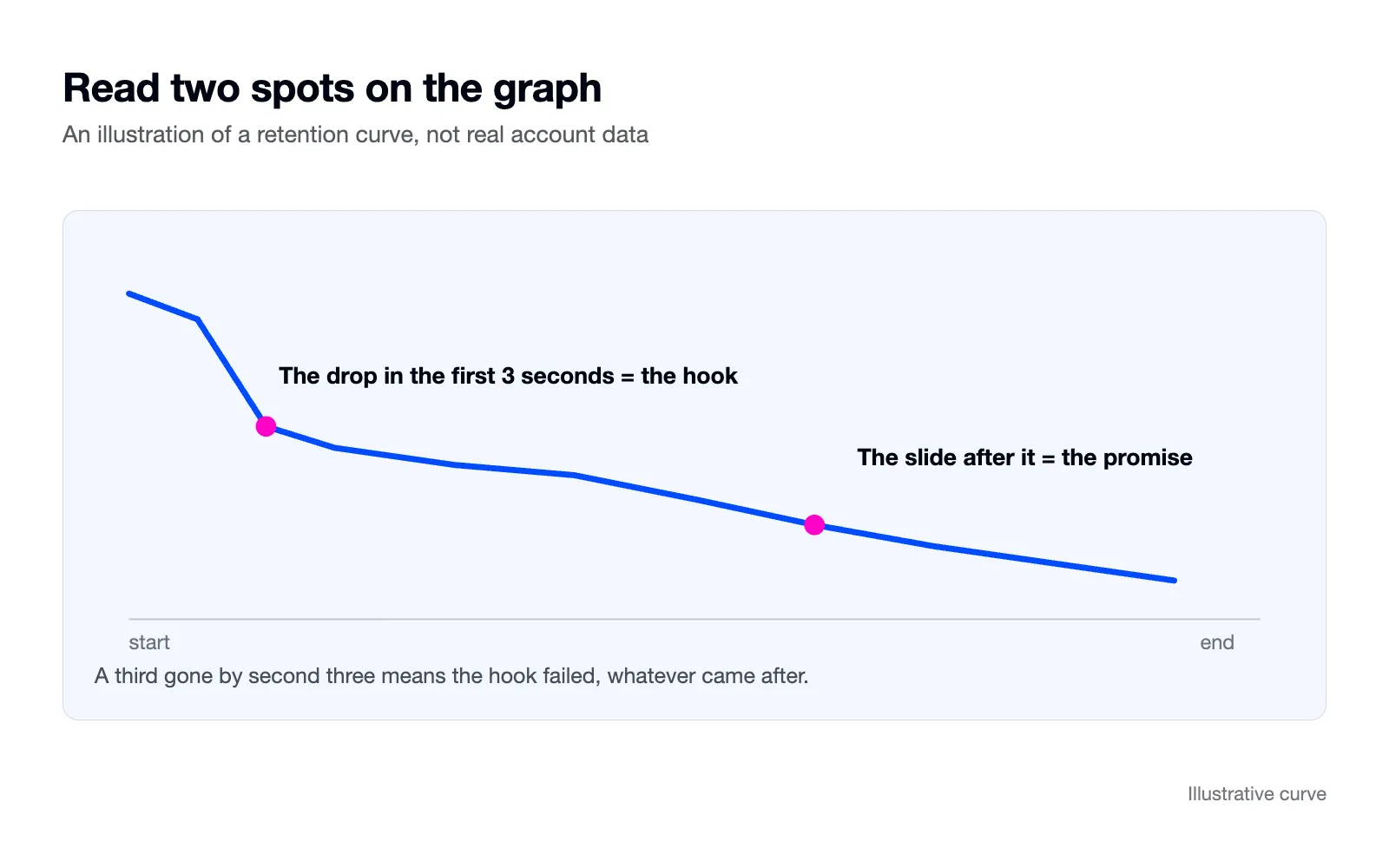
Read two spots on the graph. A steep drop in the first three seconds means the hook failed. A steady slide after that means the video did not deliver what the hook promised. Fix them in that order, because nobody sees the second half of a video they left in the first. A working threshold: if more than a third of viewers are gone by second three, the hook failed, whatever came after.
The results will tell you which pattern your audience answers to, and that answer is worth more than any general rule, ours included. Then make the next month's videos open that way.
Georgia May
CEO & Founder of Tea & Toast