
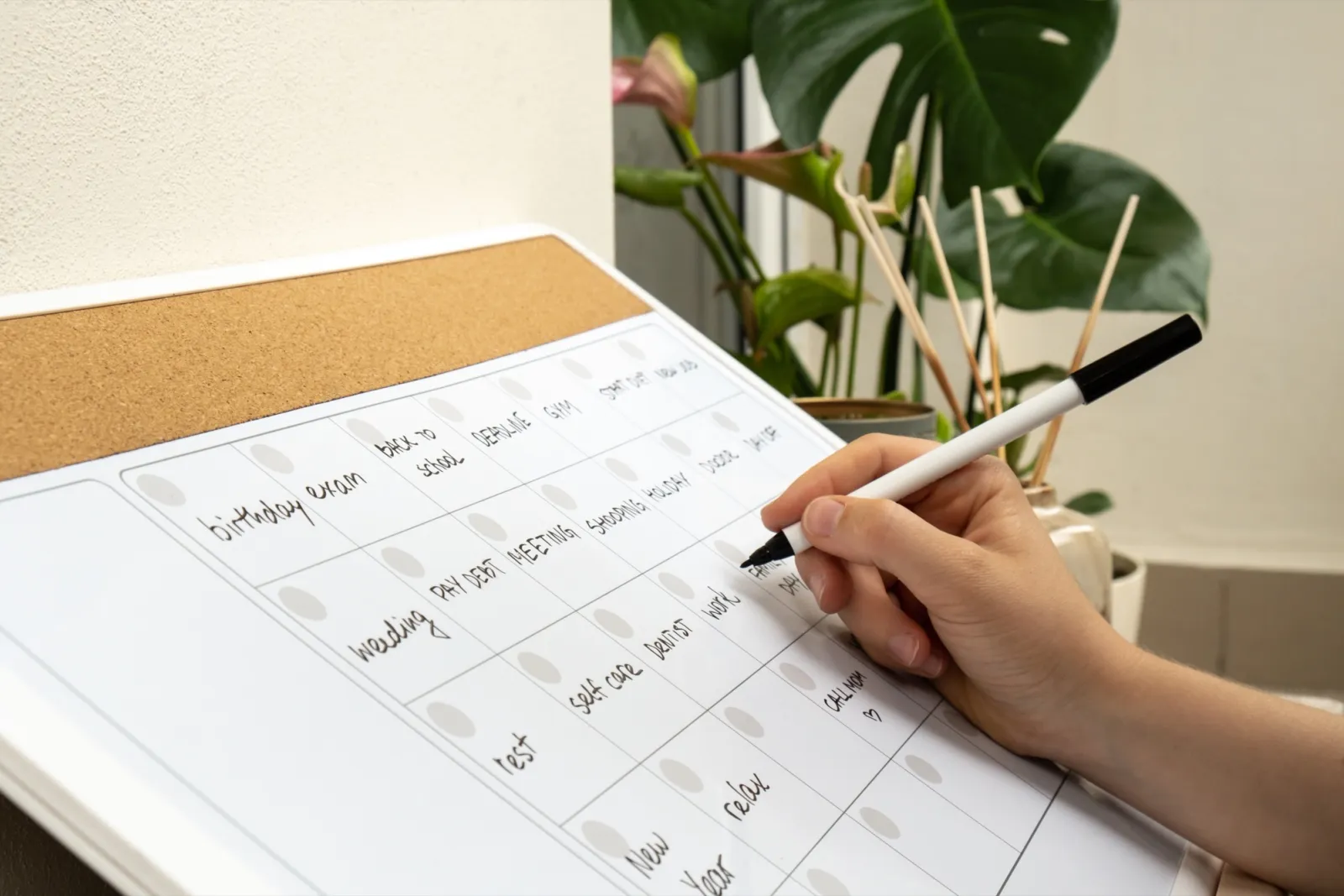
A content calendar somebody actually keeps
Most content calendars die in week three. The ones that survive hold fewer posts, more real detail, and one planning hour a month.
A calendar that survives a busy week. Every post gets a date, a platform and a reason before the month starts, so nobody opens the app on a Tuesday wondering what to put out.

Planning arrives as a month you can read: the calendar, the reason against every post, and one round of changes before it locks.
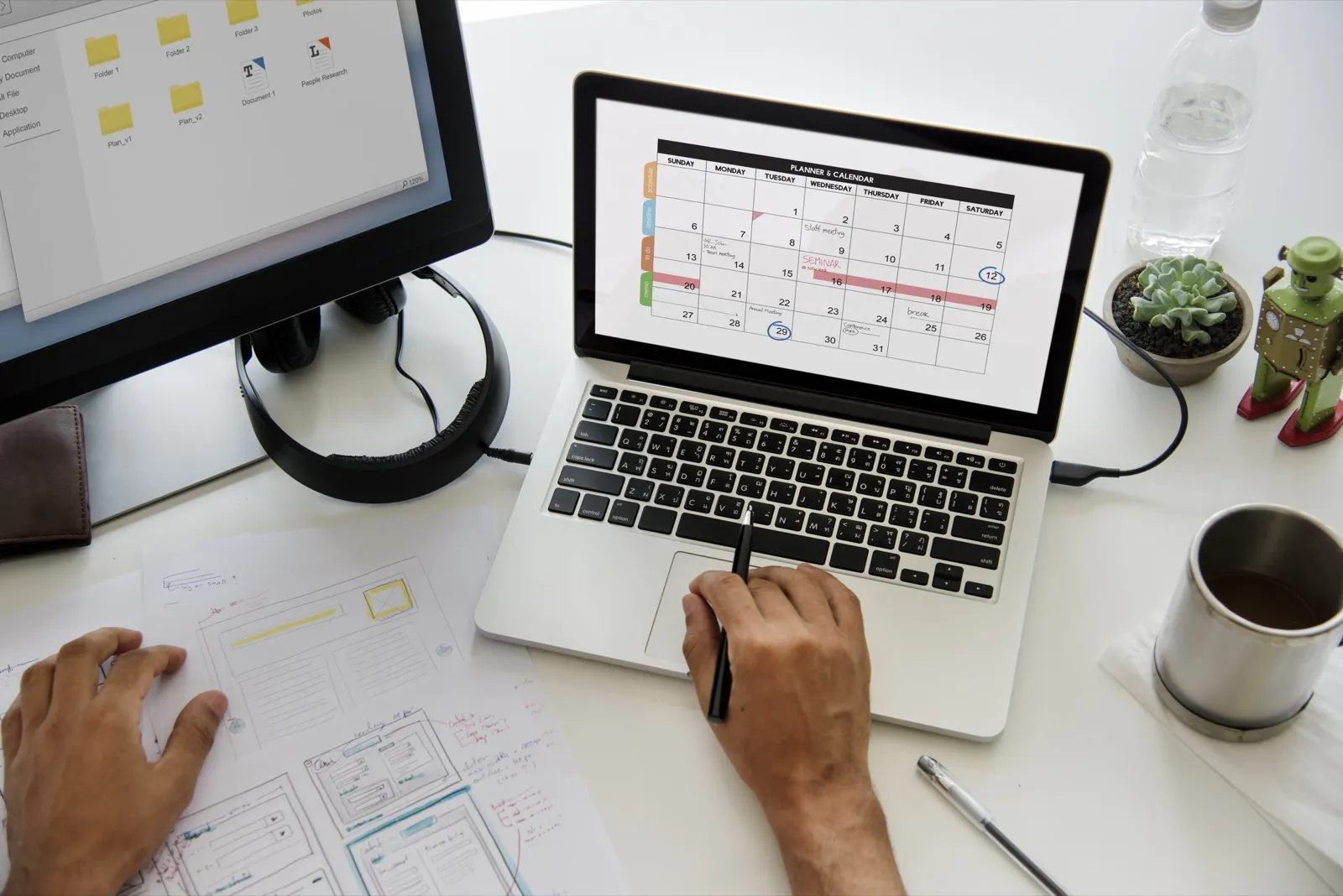
A month of posts with a date and a platform against each one. You see the whole month on one page, so you build up to a launch and fill a quiet week on purpose.

Every post carries a line saying what it is for: selling something, answering a question from your inbox, or reminding people you exist. A post with no job comes off the calendar before it costs anyone a day.

The draft month goes to you before we make anything. You cross out what you do not like, we replace it, and the month locks. From then on the calendar is the answer to what goes out this week.
From the strategy documents to a locked month.
 1
1The audience brief, the voice guide, the posting rhythm, and last month's numbers. We build the calendar from what they say, not from a blank page.
 2
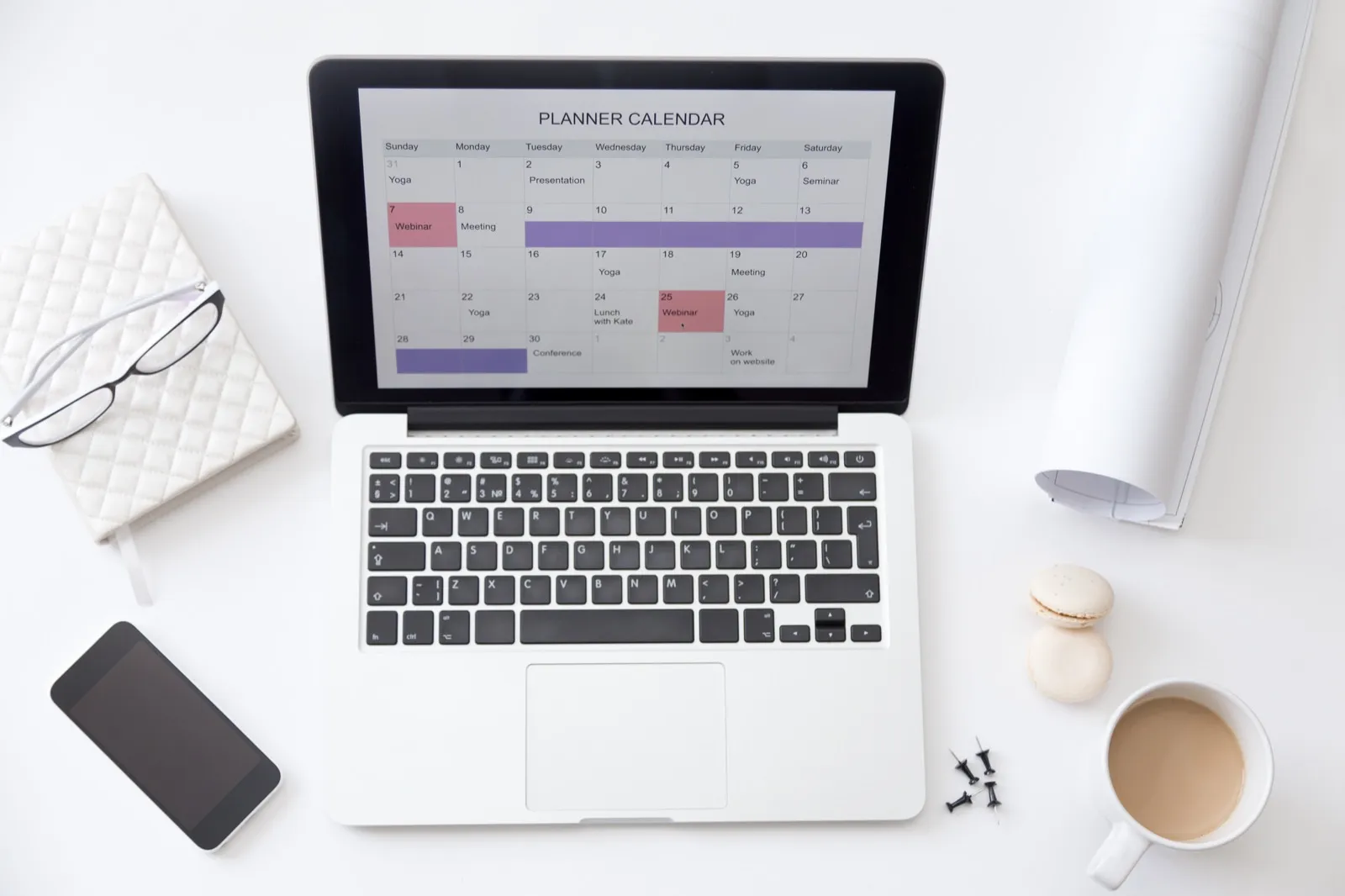
2Every slot in the posting rhythm gets a post: a date, a platform, and the line saying what it is for.
 3
3The draft goes to you for one round of changes. You cut what you do not like, we replace it, and the month locks.
 4
4Creation makes what the calendar orders. The writing starts with the decisions already made, which is why it comes out in one voice.
What people ask about a month that locks.
Two posts on what a planned month looks like.
Most content calendars die in week three. The ones that survive hold fewer posts, more real detail, and one planning hour a month.

Buffer's data says regular beats frequent by five to one. The right cadence is the one your worst week can survive.
We go through every profile you have, top to bottom: the bio, the links, the pinned posts, and your last month of content. You get a written report on what is working, what is not, and what we would change first.