TikTok search ranks videos by how well they match the query, and follower count is not one of the signals. Digivate's 2026 guide to TikTok keyword research states it flatly, and the results pages back it up: a shop with 50 followers outranks a creator with 50,000 when its video answers the search better. For a small account, search is the fairest part of the platform.
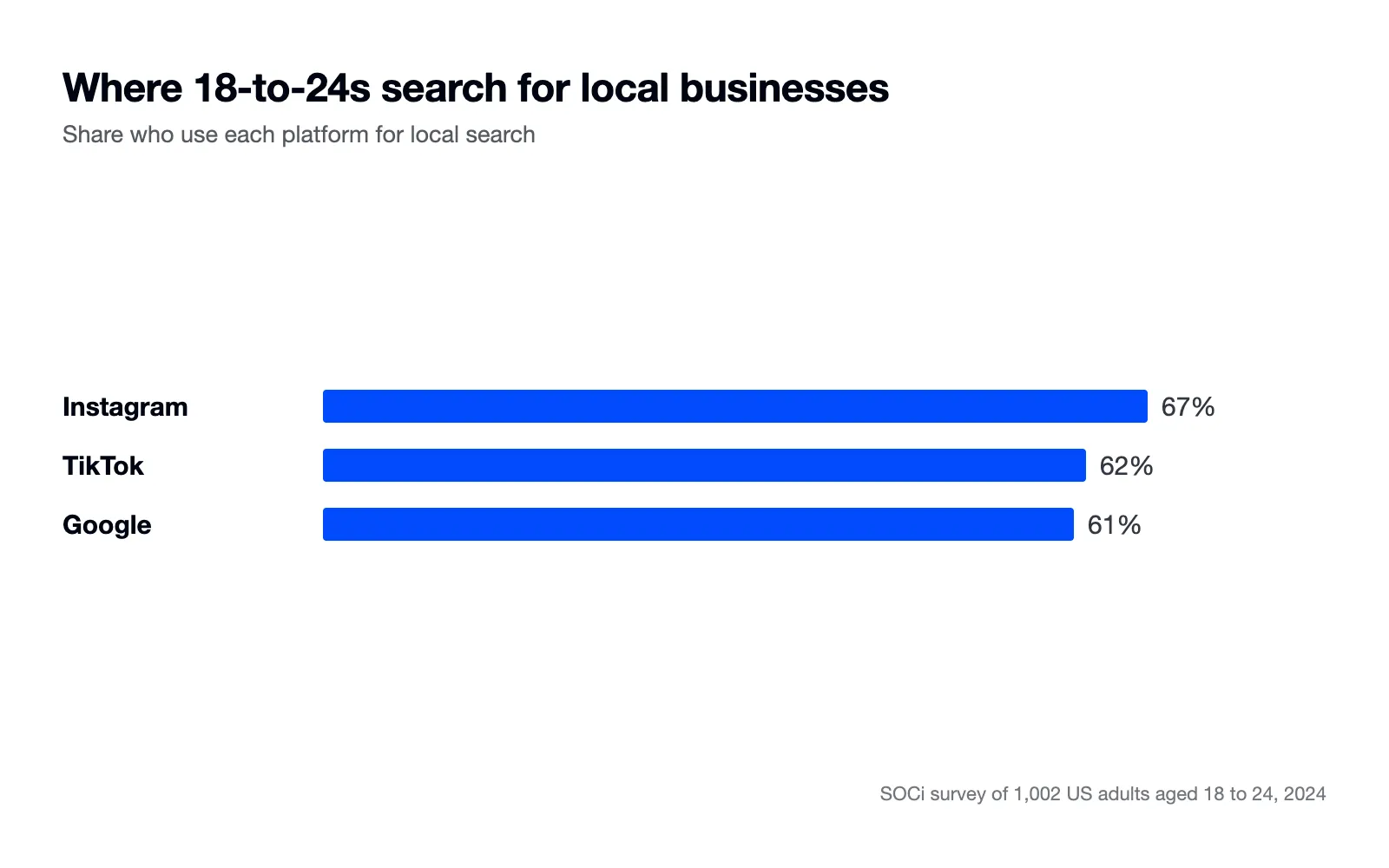
It is also where the buyers are. SOCi surveyed 1,002 Americans aged 18 to 24 in 2024 about where they search for local businesses. 67% said Instagram, 62% said TikTok, and Google came third at 61%. A person typing into TikTok's search bar is not killing time in a feed. They are looking for something, and the video that answers them wins the visit.
How TikTok reads your video
TikTok transcribes the words you speak. It reads the text you put on screen. It reads your caption and your hashtags. From those four sources it decides what the video is about, and then engagement on the search results page, watch time and saves above all, decides what ranks and stays there.
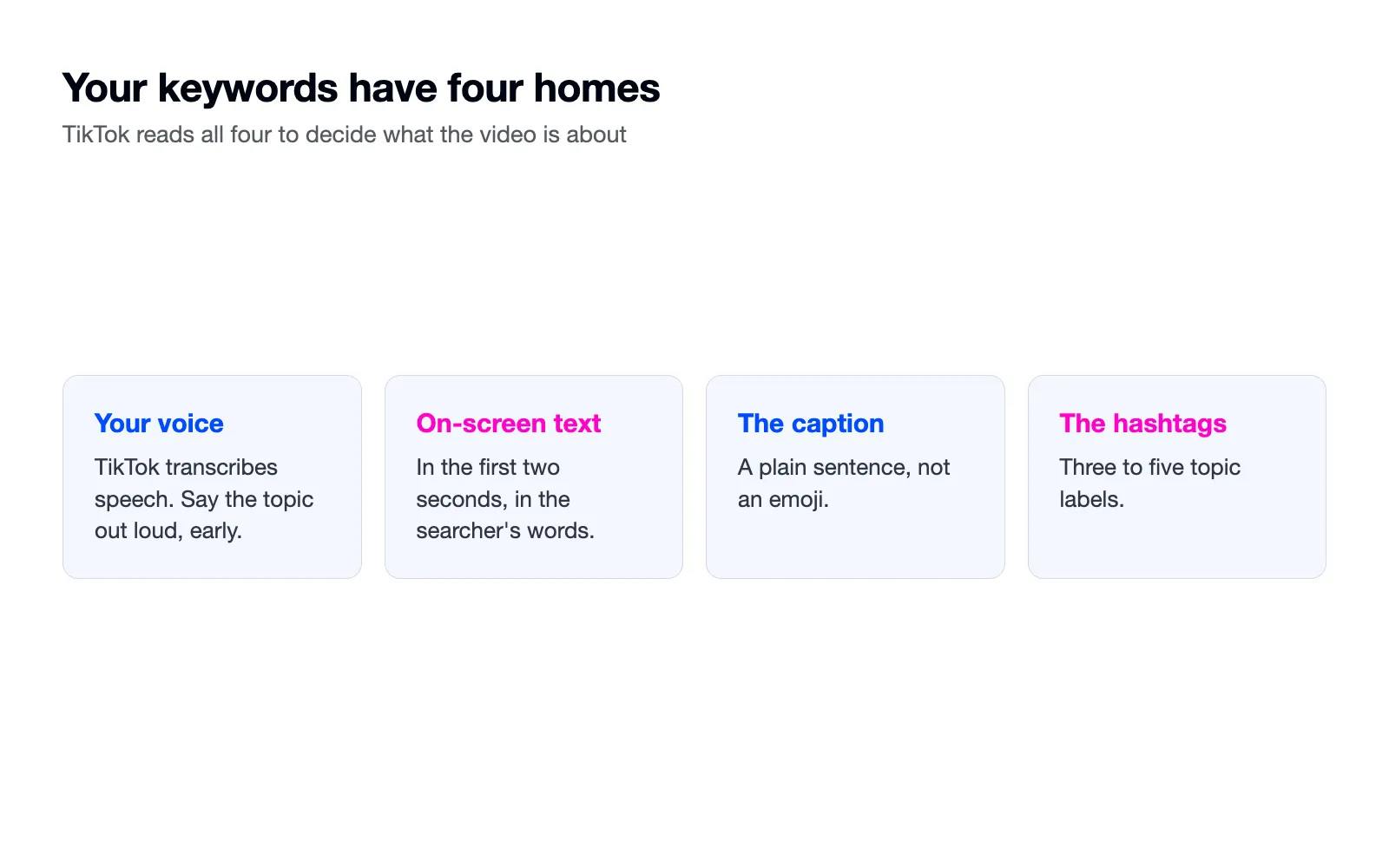
The practical consequence: your keywords have four homes, and your voice is one of them. A video that never says its topic out loud is invisible in one of the four places TikTok looks.
Find the words people actually type
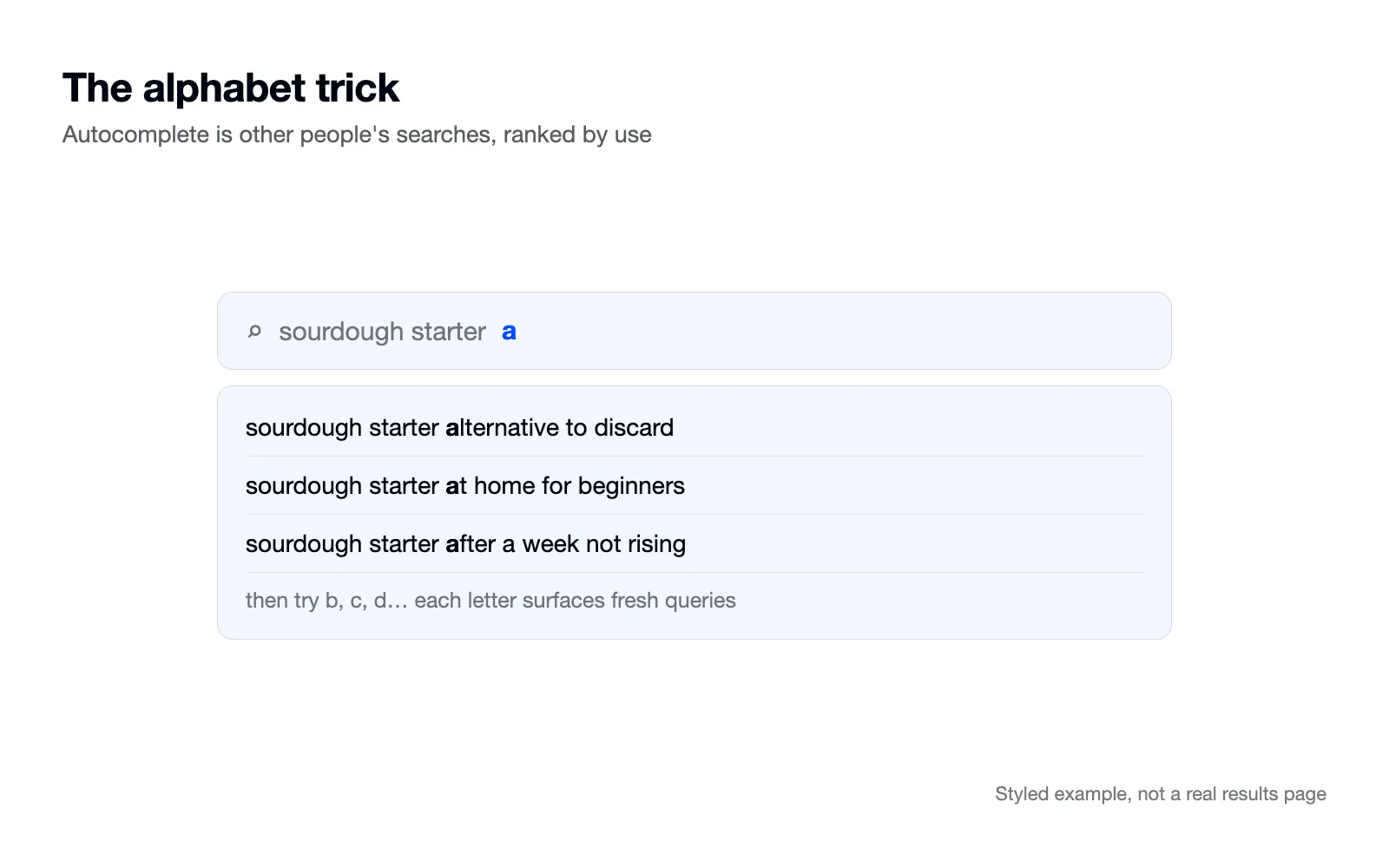
Do not guess the query. Open TikTok, tap the search bar, and type the root of your topic: lash lift, sourdough starter, small office plants. The autocomplete suggestions underneath are real searches, ranked by real use. Write them down.
Then run the alphabet trick. Type your root word plus a, then plus b, and so on. Each letter surfaces a fresh set of suggestions. Ten minutes of this produces a list of queries in the exact words searchers use, which beats any keyword tool's paraphrase of them.
TikTok also volunteers queries while you browse. The others searched for panel on results pages and the search suggestions that appear above comment sections are the platform telling you what people typed next. Note those down too, because a question people ask after watching a video like yours is your next video.
Finally, search your best query and study what currently ranks. Read the captions, listen for the spoken keyword, note the on-screen text. That page is the competition, and everything it does right is there to copy.
Put the query in five places
Say it out loud in the first sentence. The transcript is a ranking source, and the start of the video weighs heaviest.
Put it in the on-screen text inside the first two seconds, in the searcher's words. This is the same move a good hook makes, which is not a coincidence: the hook and the search match are the same two seconds doing two jobs.
Write it into the caption as a plain sentence. A caption that says lash lift aftercare, everything the salon forgot to tell you, gives search something to hold. A caption that is one emoji gives it nothing.
Use three to five hashtags as topic labels: the query, the service, the town if you are local. Hashtags are labels that tell search what the video is about. Thirty hopeful tags tell it nothing.
And make the bio say what you do in searchable words. Lash tech in Norwich beats dream architect, every day of the week, because nobody has ever typed dream architect into a search bar. Local businesses: the town name in the bio helps every video you post.
Mistakes that keep good videos invisible
The commonest one is music over voice. A trending sound turned up loud drowns the speech the transcript needs, so the video loses its strongest keyword source for the sake of a song nobody searched. Keep the voice on top and the music under it.
The others are quieter. Emoji-only captions, which read as blank. Keyword lists jammed where a sentence should be, which read as spam to platforms actively down-ranking it. And deleting a video to repost it for a better launch, which throws away the watch history that search rankings are built from. A video that keeps its history ranks better than one that starts over.
The same method works on Instagram
Instagram search runs on the same inputs, and remember that SOCi's survey put Instagram first for local search, ahead of TikTok and Google both. Write real captions in plain sentences rather than emoji strings. Fill in alt text on every post, in your own words, describing what the image shows. Make the bio say the thing and the town. The platform changes, the method does not.
Google is watching all of it too. Short videos from TikTok and Instagram now appear directly in Google results, so a video that ranks in-platform can surface in a second search engine you never optimized for. One honest tutorial can end up findable in three places at once.
Make what searchers want
Most TikTok searches are informational: how to, what is, best X for Y, is X worth it. The searcher wants an answer, so the video that ranks is usually a short, direct tutorial or an honest comparison. One question, one video, answer inside the first ten seconds, details after.
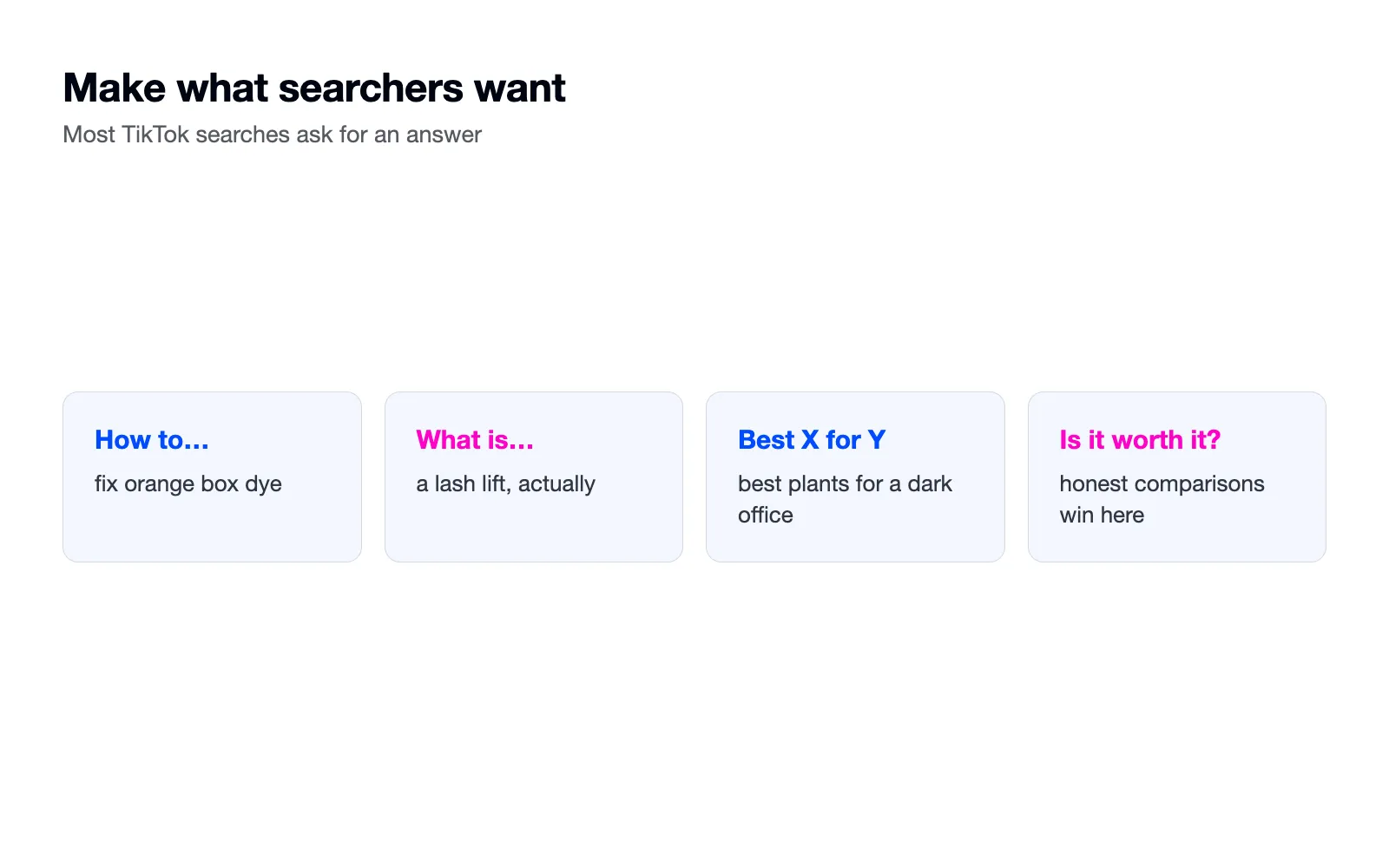
This is a different job from feed content, and it ages differently too. A trend post dies in a fortnight. A video that answers how to fix orange box dye gets found by every person who searches it for the next year. Search content keeps earning views long after you post it, which is exactly what a small account needs.
How long ranking takes
Search rankings accumulate rather than arrive. A fresh video gets its feed test within a day, but its search position builds over weeks as watch time and saves stack up against the competition, and a video can climb into results months after you posted it. Do not judge a search video on its first 48 hours, and do not delete one for starting slow. Check the analytics monthly, not daily.
The same patience adds up across videos, which is why five honest answers beat fifty feed posts by the end of a year. And the method carries to YouTube unchanged: Shorts have their own search bar and the same four keyword homes, so one filming session can chase the same query on two platforms. Google's short-video results move on the same slow clock.
Set the expectation before you start, because the feed has trained everyone to want a verdict by morning. Search grows slowly and brings actual customers, and it needs three months to prove it.
Start with one query
Pick one query from your autocomplete list, the one closest to what you sell. Make the video that answers it: spoken keyword in the first sentence, matching on-screen line, plain caption, three tags, done. Then check your analytics in a fortnight, where TikTok shows the search terms that found the video. That report shows whether any of this is working.
One ranking video will quietly outwork a month of feed posts. Build a small stack of them, one honest answer at a time, and search becomes the channel that brings customers while you make everything else.
Georgia May
CEO & Founder of Tea & Toast